
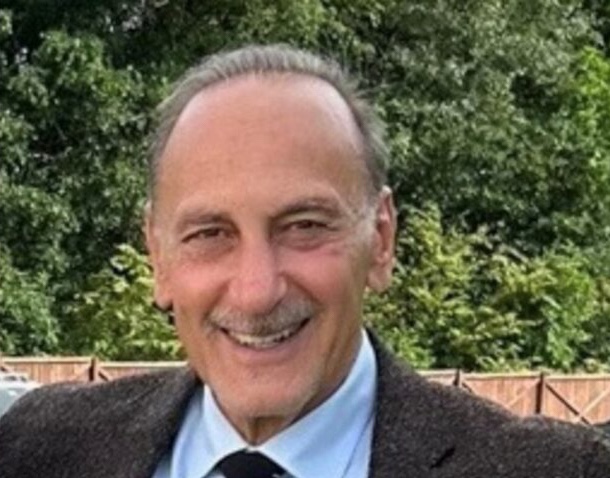
Ex-CT mob killer who renounced mafia and found God dies. It was ‘kill or be killed’ he once said
Edmund H. Mahony, Hartford Courant
February 12, 2026 at 11:58 a.m.

Gaetano Milano, a sharpshooting young gangster who renounced the mafia and experienced a religious rebirth after gunning down one of New England’s most ruthless mob bosses, died early this week.
He was 74 years old and died of heart failure in a Boston hospital on Monday.
In 1991, Milano was at the center of the country’s most riveting mob trial, which unfolded over a long, hot summer at the federal building in Hartford. He was one of seven members or associates of the then-powerful Patriarca crime family charged with a long list of of racketeering offenses — among them, the assassination of mob underboss William Grasso of New Haven.
Milano would later admit pulling the trigger and weep bitterly for having done so. He renounced the mafia, repented utterly and embraced religion in prison. In 2008, the judge who once considered sending Milano to prison for life was so persuaded of the sincerity of the conversion that he reduced the sentence, leading to Milano’s early release — and continuing questions about the character of the man he confessed to killing.
KEY MOB TRIALS WITNESS IS SPARED PRISON TERM
Grasso was a sputtering, spitting, seething cauldron of rage known as “The Wild Guy.” He acknowledged to an informant once that his big career break was an extortion conviction that put him in federal prison, where he became mob Boss Raymond L.S. Patriarca’s cellmate.
In the 1960s, long before convictions in Hartford and Boston effectively destroyed the mafia, Patriarca was one of the most powerful men in New England. Hidden FBI microphones captured him charging recording industry executives for airtime on radio stations and listening to complaints from insurance executives about auto thefts.
When Grasso was released from the federal penitentiary in Atlanta in 1973, Patriarca made him his underboss, or second in command. Grasso turned his attention to expanding the family’s territory, pushing the New York mobs out of New Haven, Hartford and Springfield.
Gangsters from Stamford to Springfield who dared to challenge Grasso disappeared or turned up dead. One of them, an old Grasso partner named Ralph “Whitey” Tropian who was affiliated with New York’s Colombo crime family, was cut down by gunfire from a passing car in broad daylight in April 1980. He was said to have been considering a return to business in New Haven.
“Why do we go for years and years in Connecticut without a hit and now … ?” an FBI agent in New Haven mused after Tropiano became the third Connecticut gangster to die or disappear in less than a year.
To cement his control over western Massachusetts, Grasso administered the mob’s secret blood oath and inducted two new Patriarca soldiers from Springfield. Milano was one of them.
What Milano and all the other mobsters who reported to Grasso soon learned was how terrified they were of the new underboss. They hated his greed, yet handed over half of whatever they made from running card and dice games, putting loans on the street at exorbitant rates, from insurance scams or simply from stealing. To do otherwise could be fatal.
Patriarca gangsters in Hartford, Springfield and Boston, fed up with Grasso’s greed and convinced they were on his short list of victims, decided to strike first. Their plot to kill him was outlined in prosecution papers and testimony at the Hartford trial. It was part of a wider attempt by disgruntled Patriarca factions in Hartford and Boston to seize control of the family.
The Hartford crew, over which Milano had asserted himself, got Grasso into a van on the pretext of a meeting in Worcester. Always angry, Grasso was raging about being late. He hoisted himself into the front passenger seat. Milano climbed in behind him and fired a .32 caliber bullet into the back of his neck. The mobsters turned the van around, pulled off the highway and dumped Gasso in a patch of poison ivy along the Connecticut River in Wethersfield.
Milano was charged and convicted of Grasso’s murder on the testimony of two co-conspirators, father and son Hartford gangsters John “Sonny” Castagna and Jackie Johns. The two took a plea bargain deal from federal prosecutors and joined the federal witness protection program.
Milano’s sentencing in Hartford in November 1991 was high drama. U.S. District Judge Alan Nevas would impose sentence. He considered the months-long mob trial a high point in his career and he was one of the harshest sentencers in the district.
Milano’s family and friends packed Nevas’ courtroom. He he had denied for months having anything to do with Grasso’s murder and everyone, including his wife and parents, expected he would continue to do so. But there was an unexplained delay. And when the U.S. Marshalls led Milano into the courtroom, in shackles, his lawyer, F. Mac Buckley, told Nevas that Milano had something he wanted to say.
“All my life I’ve tried to help people,” Milano said, beginning a rambling monologue racked by sobs. He seemed to be trying to say that he swore allegiance to the Mafia to protect people from evil. “And that was the reason for my association.”
“It was like touching a spider web,” he said, thin and drawn after months in jail. “Once you touched it, you just couldn’t let go.”
He decided to kill Grasso, he said, because he was convinced the underboss had decided to kill him. There had been witnesses over the four month trial the previous spring and summer that supported his claim.
“I never buried nor helped bury or killed anyone for Mr. Grasso in my entire life,” Milano said, referring to the secret mob grave beneath a garage in Hamden where Grasso buried victims. “But I do take responsibility for Mr. Grasso because it was either kill or be killed.”
Nevas, was stunned.
“Are you telling me you killed Mr. Grasso?” he asked.
“Yes, sir,” Milano answered. “I am.”
Milano then broke down in sobs, and only snatches of what he said were comprehensible: “I know I’m losing my wife and my children. … I wholeheartedly renounce my membership in this organization. People like William Grasso — all they do is maim or destroy people, make people disappear.”
When Milano collected himself, Nevas told him the sentencing was one of the most difficult in which he had been involved.
“To sit here and look someone in the eye and say you’re going to go to jail for the rest of your life is a very difficult job,” Nevas said. “But all that changed today because of what you stood here and said.
“I can’t send you back to your wife. I can’t send you back to your children. You did a terrible thing. You killed another human being. No matter how evil a person he was — and he was an evil man — no one has the right to kill another human being under those circumstances.”
Nevas had intended to impose a sentence of life without parole. Instead, he sent Milano, then 40, to prison for 33 years, meaning he had a chance to get out alive.
Milano met Nevas again in court 17 years later in 2008 and there was not doubt then on Nevas’s part about Milano’s sincerity. H reduced the sentence by another seven years, setting in motion Milano’s release. He was then 56.
In prison, among other things, Milano taught himself to counsel other inmates, in particular young men whose offenses were associated with drug and alcohol use. He also became a talented and self taught artist. Some of those with whom he corresponded could count on receiving extraordinary, hand-painted cards at Christmas.
Milano’s new lawyer, Craig Raabe, described his client as a model prisoner who found comfort in faith and counseled younger inmates.
Nevas said he had received letters supporting Milano’s release from prison guards. And he complemented Milano on his artwork.
“So your rehabilitation, Mr. Milano, has been extraordinary and remarkable,” the judge said. “You did commit a terrible crime. The description of the actual crime itself was chilling.”
“It’s been an incredible odyssey,” Milano replied.
After his release, Milano taught art therapy and counselled people with drug and alcohol dependencies in western Massachusetts.
Over many years, Milano became close friends with Ray Lopez, who was one of the most active probation officers at the federal court level until his retirement. Lopez has written a book called “The Painter,” based on Milano’s experience.
From mob gunman to art therapist, devoted Catholic: Services for Gaetano Milano Sr. reflect his old, new lives
By Stephanie Barry | sbarry@repub.com
Feb. 17, 2026, 12:17 p.m.

SPRINGFIELD — Gaetano J. Milano Sr. was an emerging mobster and triggerman who in 1989 took out one of the most volatile gangsters in the region.
After he died at 74 on Feb. 9, those who attended and spoke at his funeral services Monday reflected an end game that eludes many Mafia soldiers: true redemption.
After he was released early from federal prison in 2013 following an appeal, Milano became an art therapist for a Pioneer Valley mental health agency. He also fully immersed himself in the Catholic religion, according to family and friends.

Milano, a handsome upstart caught up in a chaotic time in New England mob history, still took time to love and tease his children, son Gaetano Milano Jr. told mourners on Monday morning.
“As hectic as my dad’s life was when we were young, he always knew what mattered,” Milano Jr. said during the eulogy.
Milano Sr. attended every soccer game for his daughter and events for his other children. He also took great joy in teasing them with playful pranks.
“That was his love language,” Milano Jr. said, adding: “As for me, I was his sidekick.”
Milano died after a battle with heart disease at a hospital in Boston. His son told mourners at St. Michael’s Parish in East Longmeadow that his father’s health struggle began in earnest about nine months ago.
His history … and turnaround
In 1989, Milano killed Billy “The Wild Guy” Grasso — a violent street boss in the Patriarca crime family out of New Haven, Connecticut — after Milano Sr. had been summoned to a wedding by late Gambino mob boss John Gotti. An Italian immigrant, Milano Sr. had been formally inducted into the Patriarca family in 1985.
The New England underworld had become savage with bodies of rivals turning up everywhere, according to published reports and court records. Gotti wanted it to settle down, Milano’s son said.
Grasso’s body turned up in the Connecticut River, riddled with gunshot wounds. Milano was convicted along with several others for racketeering and other charges after a trial in Hartford, Connecticut.

But his life was transformed behind bars. He found God. He also experienced solace in creating his own artwork. He wept for his transgressions and renounced the life of he once embraced for its glamour and adrenaline.
The turnaround inspired many, including Milano Jr., the lead advocate to get his father out of prison early. A federal judge in 2008 was moved by the elder’s rehabilitative work behind bars, and impassioned pleas by his defense attorney and Milano Jr.
“(He) made me see that you can restore relationships you thought were beyond repair,” Milano Jr. said at the church.
Milano Jr. was 12 years old when his father went to jail in 1990. He visited regularly over the years, as the elder was transferred from prison to prison. They remained close once his father was released, until his last breath.
The attendees at the services reflected the arc of Milano’s life. Local mob associates came to pay their respects, as well as elders from New York and Philadelphia. His onetime codefendant, Frank Colantoni, also a childhood friend, stood by Milano Jr. during the church service.
His colleagues from Swift River in Cummington, where he worked in the final years of his life, came out in force.
Co-worker Kyle Jensen spoke at Milano’s funeral Mass, telling mourners how he struggled to make it through night shifts, then made his way to day shifts and carved out his own private art room.
“We called him ‘the art boss of Swift River,’” she said, drawing laughter. “He listened deeply. He walked with people when they were struggling.”
Milano turned out to be a gentle soul in his later years, family and friends said. He encouraged patience, peace, faith and walking in the grass barefoot.
His former U.S. Probation officer from Connecticut, Ray Lopez, attended the service. Lopez met Milano when his resentencing was near.
“I’ve handled hundreds, if not thousands, of cases. I’ve never met anyone like Gaetano,” said Lopez, now retired. “He’s a story like no other.”
The men bonded over Christianity and remained friends since.
Gaetano is survived by his children: Diana and her husband, Anthony; Gaetano Jr. and his wife, Melissa; and his son, Nicolo. He also leaves behind his cherished grandchildren, Mateo, Justin, Katelyn, and three other loving grandsons.
He is further survived by his partner, Catherine Marvici; his siblings, Virgilio Milano (Merry), Anna Becker (Jeff), and Cristina Min (Patrick); his former wife, Judy Milano; and his dear lifelong friend, Frank Colantoni, according to his obituary.
A celebration of life will follow at a date yet to be set.

Gaetano J. Milano Sr.’s journey from mafia killer to a better man
By The Republican Editorials
March 2, 2026, 8:32 a.m.
Funerals are usually quiet and somber affairs. Grieving family and friends share memories of the departed, hoping to find comfort.
The other day, one of the things people said of the late Gaetano J. Milano Sr. was that before he died Feb. 9 at age 74, he managed through religious faith and his own tenacity to restore relationships that seemed beyond repair.
That’s a remarkable, even inspiring, accomplishment, especially for someone once entwined in the darkness of the New England mafia.
As The Republican’s Stephanie Barry reported, Milano went to federal prison in 1990 after being convicted of killing a fellow mobster. Milano then spent more than 23 years in prison. That part of his life story is sadly commonplace.
Those attending his funeral learned this month that something remarkable happened to Milano as he paid what used to be termed a “debt to society.” His Catholic beliefs deepened and he found solace and spiritual healing through the creation of art.
It’s hard for outsiders to judge how transformative that experience was. And to be sure, it’s the kind of thing often said of a person who’d rather not be in prison.
But as those at Milano’s funeral learned, plenty of naturally skeptical people became convinced that by 2013, this was a different man than the one who in 1989 took part in the shooting of Billy “The Wild Guy” Grasso.
Released early from his sentence, Milano had to report to Ray Lopez, a federal probation official. This hardened hand, who’d likely heard it all, told listeners at St. Michael’s Parish in East Longmeadow this month that Milano had found an elusive redemption for his crimes.
“I’ve handled hundreds, if not thousands, of cases,” Lopez said. “I’ve never met anyone like Gaetano. He’s a story like no other.”
After his release, Milano repaired his relationship with his son and namesake, Gaetano J. Milano Jr. The son described his dad’s playful nature and fondness for pranks and practical jokes. “That was his love language,” Milano Jr. said.
“Love” wasn’t what helped him ascend, as a young Italian immigrant, in the ranks of the Patriarca crime family in New Haven, Connecticut, which embraced him as a member in 1985. It was his willingness to kill – and eventually he got the order, reportedly from late Gambino mob leader John Gotti, to assassinate Grasso.